
Leading the Charge
The term Social Justice Warrior or SJW is often used as a derogatory term given to a person that promotes socially progressive views. When tasked with coming up with ways in which teaching authentic writing can promote social justice, I immediately came up with the idea of changing this term into Social Justice Writers. This train of thought led me further into thinking about the age-old quote “the pen is mightier than the sword” and how currently, social justice writing is of the upmost importance. As future teachers of writing, we have a unique responsibility to arm our students with the tools necessary to become critical thinkers who challenge the social standards present within our society. That sounds like an overwhelming task, however, by simply teaching our students the value of authentic writing and their value as writers, change is more likely to happen.
Everyone Can Be a SJW

As I mentioned in my previous blog post, drawing from the guiding principles of the National Council of Teachers of English (NCTE), one of the single, most important things we can instill in our students is that they are all writers. Not only is this a great thing to teach students for them to become better writers, but it also can teach them how to find and use their voice. Obviously, I am not talking about simply their ability to speak but rather how to take what they believe and their experiences and turn it into words on a page. Some students might have great things to say but have trouble articulating themselves and getting their words out. Other students might have great things to say but aren’t confident enough say them. In most cases, students who are only taught traditional writing are rarely given the opportunity to use their own voice and speak up. Therefore, we must teach our students the value of authentic writing, or “real writing, written for a real audience, for a real purpose, in a real forum” as defined by Leila Christenbury and Ken Lindblom in their book Continuing the Journey 2: Becoming a Better Teacher of Authentic Writing. As teachers of authentic writing, we have the ability to unlock our students’ power to convey their thoughts and feelings effectively through writing while also giving them confidence necessary to do so.
Along with ensuring that our students believe that they are writers, we also have to make sure that we engage our students in a way that allows all of their voices to be heard. Another important guiding principle from the NCTE is Principle 2.2: Writers bring multiliteracies, and they bring cultural and linguistic assets to whatever they do:
“Writers also bring their past writing and reading practices with them whenever they write or read. In short, everything they have experienced, who they are, where they have been, and what they have done impact their writing practices, literacies, and language attitudes.”
This is pivotal in viewing writing as a form of social justice because it highlights how writing is closely linked to identity. This principle also notes how writers are influenced by their experiences, whether positive or negative, which sometimes leads to writing being more emotionally impactful. However, the type of traditional writing instruction present in schools normally hinders students’ abilities to write about themselves, their emotions, their opinions or many other aspects linked to their identity. Traditional writing in the classroom is normally formal, impersonal, and lacking any depth beyond constructing an argument. Therefore, as teachers of authentic writing, we have to ensure that we give our students the tools and opportunities necessary for them to properly express their unique identities.
SJWs Express Themselves
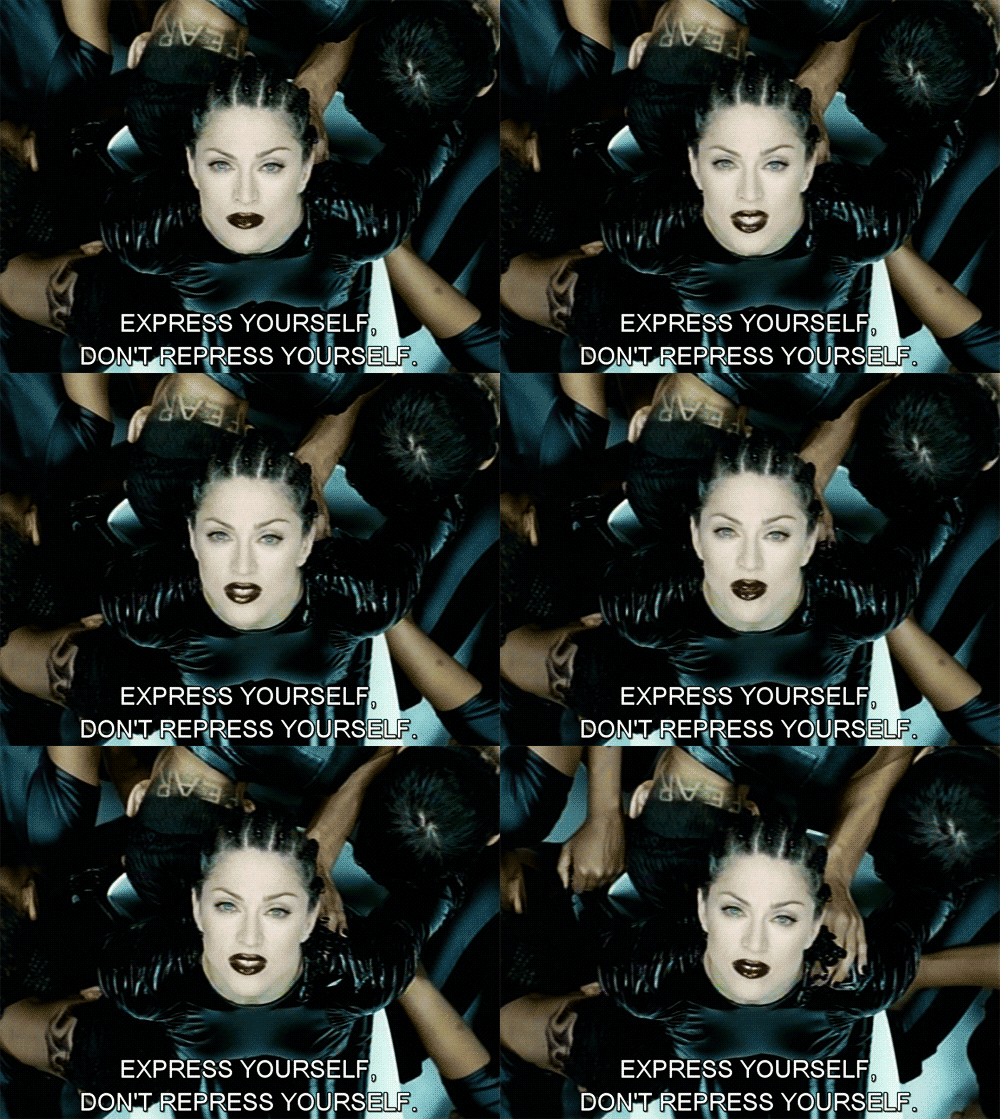
By allowing students to express themselves in their writing, they might learn how to speak up for themselves and articulate their emotions in a larger way. Jim Burke, author of The Six Academic Writing Assignments: Designing the User’s Journey, writes about how it is important for teachers to remember the three H’s – the head (intellect), heart (emotions), and hands (skills) – in mind when creating assignments. Although he was referring specifically to a yearlong research project he had his students complete, I find the three H’s to be an important guide to keep in mind when creating any writing assignment. Students are often only asked to focus on the head and the hands, but very rarely their heart. This can possibly be attributed to the fact that teachers may not want to open the floor to uncomfortable discussions surrounding emotions. However, sometimes part of teaching authentic writing IS to be uncomfortable with subject matter and that is perfectly okay as it emulates writing in the real world.
In her 2019 blog post titled “Emotion and Intellect: An Unconventional Pair” for Writers Who Care, Cait O’Connor writes extensively about the importance and power of allowing students to express their emotions in writing. She states:
“Allow students to be angry, upset, sad, and emotional in their authentic writing. Because if they’re one or a few of these things when they write about an issue they care about, it’s probably because it affects them personally. And who are we to taper down their experiences, especially if those experiences have to do with racism, sexism, homophobia, transphobia, ableism, and ageism?”
I thought this was a really powerful quote because by not allowing our students to discuss their feelings in their writing, we are in some way contributing to their oppression. Students who are taught to express themselves in their writing can begin to realize the importance of what they have to say and can in turn help others who have gone through similar experiences. This type of discourse is the basis for many social movements as people facing similar types of oppression begin to share experiences and come together to overcome them.
SJWs Identify, Speak Up and Overcome

In the real world, we need to be able to properly identify things that make us uncomfortable so we can figure out how to overcome that feeling. If something is bothering a student, they should be allowed to properly express themselves through their writing. Jim Burke also excels at this and includes many of his students’ voices throughout his book. He asks them about their thoughts on specific assignments, but more importantly, how they FEEL about the assignments. This type of discussion with students is almost unheard of but is essential in creating critical thinkers and people that might be more likely to speak up when dealing with things that they don’t like. It also goes a long way into promoting equity and fairness in the classroom by letting every student be heard and have a say in the way their writing instruction continues. This can also empower students to recognize that their voices matter and that they deserve to be treated fairly and with respect inside and outside the classroom.
To continue my previous point, Jim emphasizes the importance of real writing by explaining:
“That spirit of engagement, the feeling that writing should be for real purposes to real people, that it can make a difference, can make things happen, is the reason that I design alternative writing assignments when I can and that I regularly bring into the classroom examples of writing from the real world that demonstrate and remind students of its importance.”
I think this quote highlights that a) Writing in the classroom is necessary to prepare our students for their lives outside of it and b) That writing does have the power to cause real change in the world. One example given by Leila Christenbury and Ken Lindblom in their book involved elementary school students that were fed up with the quality of the “mushy string beans” they were being served at lunch. The second-grade students wound up writing letters to the lunchroom manager and not only had the menu changed, but also were given the chance to taste the other available vegetables to find a suitable replacement. This story stood out to me because the students in this example were children and they were able to change something significant in their world through the power of authentic writing. If students at such a young age are able to cause change, imagine the change that students entering the world beyond the classroom can cause if they are taught authentic writing effectively.
To Arms!
By teaching our students authentic writing, we are effectively giving them the tools necessary to cause real change in the world. Skills such as knowing how to write for specific audiences, expressing and articulating feelings in writing and understanding the close link between writing and identity are all things that students can learn through authentic writing. With those skills, we as teachers have the potential to arm our students with the tools necessary to create a fair and equitable world within the classroom and beyond.

 Sean's Blog